Volcanoes National Park Hawaii
Hawaii Volcanoes National Park, on the Big Island, protects two of the most active volcanoes on Earth: Kilauea and Mauna Loa. It was established in 1916 and is a UNESCO World Heritage Site.
In Hawaiian tradition, Kilauea's summit crater, Halemaumau, is the home of Pele, the goddess of volcanoes, and the park is a sacred place for many Native Hawaiians.
Kilauea erupted almost continuously from 1983 to 2018, sending lava down to the sea and adding new land to the island. In 2018 a major eruption drained the summit magma, and the floor of the caldera collapsed, deepening it by hundreds of feet. Since then, eruptions have returned inside Halemaumau, sometimes with lava lakes and towering fountains. Mauna Loa, the largest volcano on Earth, last erupted in 2022.
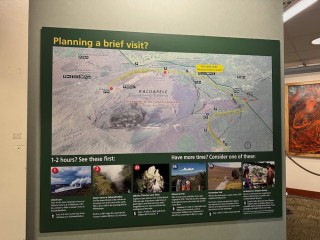
This tour covers the summit area around the Kilauea Visitor Center: Sulphur Banks, the overlook at Uekahuna, the steam vents, the Thurston Lava Tube, the Kilauea Iki crater and Devastation Trail. Check the visitor center or park website for current eruption conditions and closures; volcanic gas levels can change quickly. The summit is at about 4,000 feet, so bring a rain jacket and a warm layer.
More on Wikipedia: Hawai?i Volcanoes National Park · Kilauea · Mauna Loa
Plan your visit
- Route: 6 stops · about 9.4 miles of driving · self-drive
- Time: about 2 hours with stops
- Start: Haakulamanu (Sulphur Banks) (directions)
- Cost: free tour; the site itself charges an entrance fee
- Audio: narrated - tap ▶ Listen at the top of any stop
More tours nearby
- Maui: The Road to Hana (126 mi) - Waterfalls, black sand, banana bread and more than 600 curves on Maui's most famous drive
- Historic Downtown Honolulu Walk (213 mi) - Walk the capital of the Hawaiian Kingdom, from the only royal palace on U.S. soil to Chinatown's lei stands and the Aloha Tower.