Pagoda Street - From Coolie Trade to Street Market
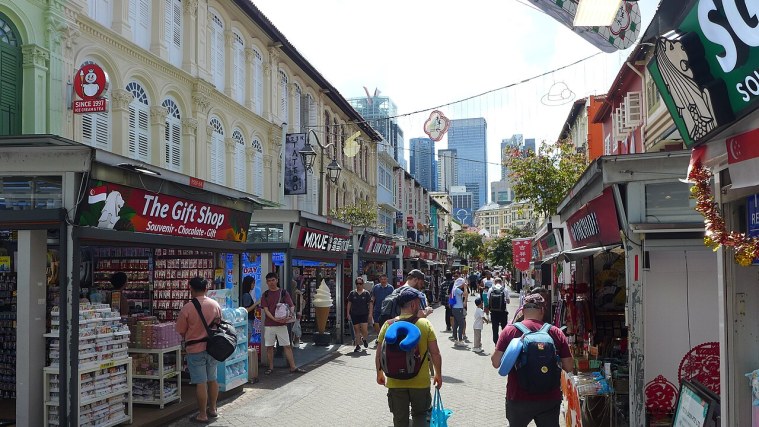
Photo: Bahnfrend, CC BY-SA 4.0 (cropped)
A stop on Singapore: Marina Bay to Chinatown, a free self-guided tour.
Pagoda Street takes its name from the temple tower you just saw. Chinese speakers once called it the street behind the Indian place of worship. Today it is the busiest lane of the Chinatown Street Market, with stalls of lanterns, magnets, silk, tea and snacks spilling out from the shophouses.
The history here is harder. From the 1850s to the 1880s, Pagoda Street was a center of the coolie trade, where laborers recruited in southern China - many deep in debt for their passage - were housed and handed on to employers. In the early 1900s, many of these shophouses became crowded lodging houses for laborers, and the street was known for an opium den. By the 1950s the trade was long gone, and textile and tailoring shops had moved in.
As you browse, look up at the shophouse fronts above the stalls: shutters, pastel paint and carved details survived because Chinatown was protected as a historic district in the late 1980s.
Getting here: Turn back to the corner beside the temple and walk west into Pagoda Street.
Did you know?: Cantonese speakers once named this street after Kwong Hup Yuen, a coolie-trading firm that operated from No. 37.
Photo op: Stand at the South Bridge Road end and shoot down the street so the market awnings lead the eye, with the temple tower peeking in at the edge of the frame.
More on Wikipedia: Pagoda Street · Chinatown, Singapore · Shophouse
Stops on this tour
- Merlion Park - Half Lion, Half Fish
- The Fullerton Hotel - Singapore's Old Post Office
- Cavenagh Bridge - Iron from Glasgow
- Asian Civilisations Museum - The Old Government Offices
- Raffles' Landing Site - Where Colonial Singapore Began
- Boat Quay - The Belly of the Carp
- Jamae Mosque - The Chulia Mosque
- Sri Mariamman Temple - Singapore's Oldest Hindu Temple
- Pagoda Street - From Coolie Trade to Street Market
- Chinatown Heritage Centre - Life in a Shophouse
- Buddha Tooth Relic Temple - A New Temple in Tang Style
- Maxwell Food Centre - Lunch, Hawker Style