Bop City - The House That Moved
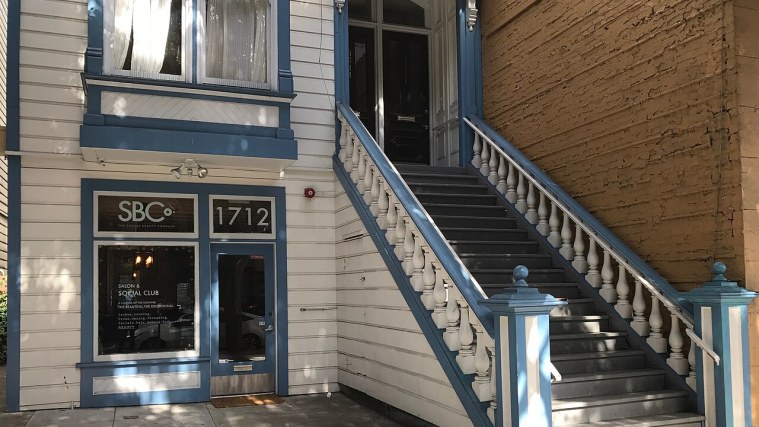
Photo: Dreamyshade, CC BY-SA 4.0 (cropped)
A stop on San Francisco, District by District, a free self-guided tour.
The Victorian at 1712 Fillmore Street has traveled. It first stood two blocks away at 1690 Post Street, where from about 1950 to 1965 John Edwards, known as Jimbo, ran an after-hours club in the back called Jimbo's Bop City. After their regular gigs, stars dropped by to jam until dawn, and it is remembered as the one club where Charlie Parker and Louis Armstrong shared the bill.
Bop City was the late-night heart of the Fillmore's jazz era, when dozens of clubs lined these streets. Redevelopment ended that era, and the house itself was slated for demolition until neighbors organized to move it here in 1978. It later housed Marcus Books, one of the oldest Black-owned bookstores in the country, and the city made the building an official landmark.
Walk south on Fillmore toward Geary Boulevard; the blocks beyond were the center of the old jazz strip.
More on Wikipedia: Bop City · Marcus Books · Charlie Parker
Stops on this tour
- Ferry Building and the Embarcadero - Where the City Met the World
- Financial District and Jackson Square - Gold Rush on the Old Shoreline
- Chinatown - The Neighborhood That Refused to Move
- North Beach and Telegraph Hill - Little Italy and the Beats
- Fisherman's Wharf - Italian Boats and Old Ships
- Nob Hill and Russian Hill - Cable Cars, Mansions and the Great Fire
- The Presidio - Two Centuries Guarding the Golden Gate
- Japantown and the Fillmore - Two Communities, One Neighborhood
- Haight-Ashbury - From Victorian Suburb to Summer of Love
- Golden Gate Park - Sand Dunes Turned Into a Park
- The Castro - A Neighborhood That Became a Movement
- The Mission - Where San Francisco Began
- Civic Center - Domes, Charters and Protest
- South of Market - From Rincon Hill to the Tech Boom