Blackwater Refuge - The Land She Learned to Read
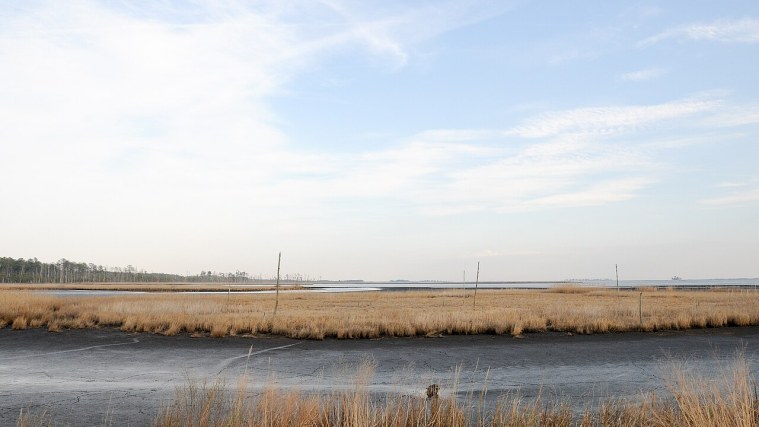
Photo: John Leszczynski from Washington, DC, USA, CC BY-SA 2.0 (cropped)
A stop on Harriet Tubman, a free self-guided tour.
Spread out before you is Blackwater National Wildlife Refuge, about 30,000 acres of marsh, loblolly pine forest and tidal water. Set aside in 1933 for migrating ducks and geese, it also protects something rarer: a landscape largely unchanged since Tubman's day. The refuge lies roughly halfway between Peter's Neck, where she was born, and the Brodess farm near Bucktown, where she spent much of her childhood.
For anyone fleeing slavery, country like this was both shield and danger. You had to know where the ground would hold and where the creeks ran deep, what was safe to eat, and how to hide from riders and dogs, often in cold or mosquito season and without shoes or a coat. Tubman learned this land by working in it, and that knowledge became her craft. No record shows her leading anyone out of this exact area, but others did escape from within today's refuge boundaries.
Stop at the refuge visitor center for maps, then drive the Wildlife Drive slowly and watch for bald eagles, which nest here in good numbers.
Getting here: From the Tubman visitor center, drive about a mile east to Key Wallace Drive and the refuge visitor center at 2145 Key Wallace Drive.
Did you know?: In 2021 archaeologists announced they had found the site of Ben Ross's cabin on land recently added to the refuge, turning up nails, dish fragments, a button and coins from the 1800s. The site is not open to visitors.
Photo op: Along the Wildlife Drive, pull into a marked overlook and frame the open marsh with a line of pines on the horizon.
Nearby: Restrooms and exhibits at the refuge visitor center; the Wildlife Drive and trails are open daylight hours. Check fws.gov/blackwater for current hours and any entrance fee.
More on Wikipedia: Blackwater National Wildlife Refuge · Harriet Tubman
Stops on this tour
- Harriet Tubman Museum - Take My Hand
- Dorchester County Courthouse - The Auction That Failed
- Long Wharf - Portal to Slavery, Gateway to Freedom
- Bethel AME Church - Pine Street's Anchor
- Malone's Church - Where Minty Was Born
- Stewart's Canal - Waterways and Watermen
- Tubman Visitor Center - Her Whole Life in View
- Blackwater Refuge - The Land She Learned to Read
- Brodess Farm - A Childhood Hired Out
- Bucktown Village Store - The Blow That Changed Her
- Scott's Chapel - Faith on Both Sides of the Road
- Leverton House - Quaker Shelter at Preston
- Choptank Landing - The River North
- Poplar Neck - Bringing Her Parents Out