Espanola Way - A Spanish Village Dream
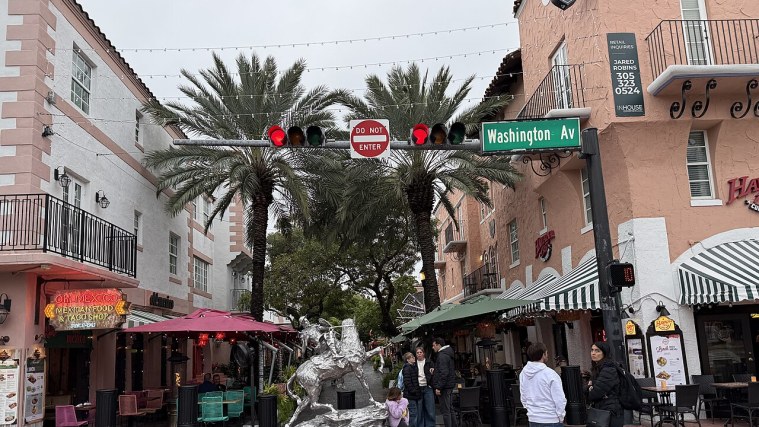
Photo: Dough4872, CC BY-SA 4.0 (cropped)
A stop on Miami Beach: Art Deco District Walk, a free self-guided tour.
Step onto this little street and you leave the Deco world for an older dream. Developers N.B.T. Roney and William Whitman launched Espanola Way in the mid-1920s as the Spanish Village, modeled on the villages of the Mediterranean in Spain and southern France: stucco walls, barrel-tile roofs, iron balconies and striped awnings. This Mediterranean Revival look was how Miami Beach built before the 1926 hurricane and the Depression made the cheaper, sleeker Deco style the new fashion.
The street comes with colorful legends. Stories say Al Capone's associates ran gambling at the Clay Hotel, and that a young Desi Arnaz played rumba here before he became famous. Treat both as local lore.
By the 1970s the buildings were run down. Preservationists, Barbara Capitman among them, pushed for restoration in the 1980s, the Clay became a youth hostel, and a later makeover added cobbled paving and new lighting. The old Clay buildings are now the Esme hotel, and in the evening the street fills with outdoor tables.
Getting here: Walk south along Drexel Avenue about three blocks to Espanola Way, then turn left onto the pedestrian street.
Did you know?: The producers of the 1980s TV series Miami Vice filmed in the area, and the attention helped spark the street's comeback.
Photo op: Stand at the Drexel Avenue end and shoot east down the street, framing the balconies, awnings and red-tile roofs.
More on Wikipedia: South Beach · Desi Arnaz · Mediterranean Revival architecture
Stops on this tour
- Art Deco Welcome Center - Where the Rescue Began
- Lummus Park - The Front Lawn of South Beach
- Colony Hotel - The Sign That Defines Ocean Drive
- Versace Mansion - A Palace on Ocean Drive
- Carlyle and Cardozo - Ocean Drive's Movie Stars
- Collins Avenue - From Deco to MiMo
- Lincoln Road - Morris Lapidus's Open-Air Mall
- Espanola Way - A Spanish Village Dream
- The Webster - A Deco Hotel Turned Fashion House
- Miami Beach Post Office - New Deal Rotunda
- The Wolfsonian - A Warehouse Full of Design