Edmund Pettus Bridge - Bloody Sunday
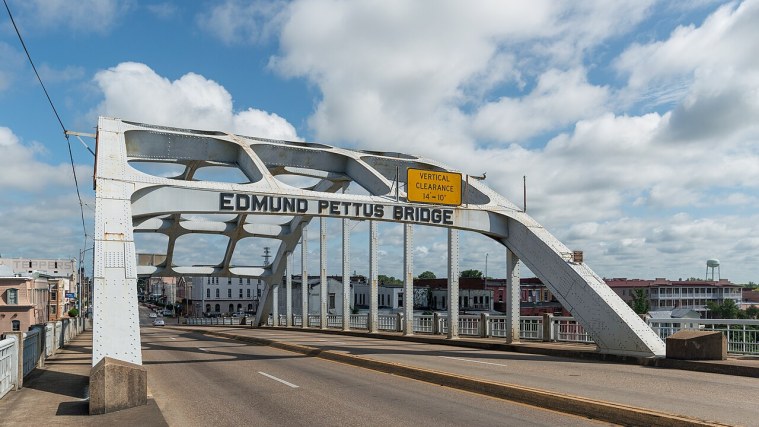
Photo: DXR, CC BY-SA 4.0 (cropped)
A stop on Selma: Bloody Sunday and the Vote, a free self-guided tour.
Walk up the sidewalk toward the crest, as the marchers did. The Edmund Pettus Bridge opened in 1940, and it carries the name of a Confederate general and U.S. senator who also led the Ku Klux Klan in Alabama. Because the bridge rises high over the Alabama River, the marchers could not see what waited on the far side until they reached the top: a line of state troopers and the sheriff's posse across U.S. Highway 80.
Ordered to disperse, the marchers stood their ground in silence. The troopers advanced with clubs and tear gas and drove them back across the bridge. Dozens were hurt, among them Amelia Boynton, who was knocked unconscious. Film of the attack, shown on television that night, shocked the nation, and the day became known as Bloody Sunday.
Two days later, on what came to be called Turnaround Tuesday, King led about 2,500 marchers to this spot, knelt to pray, and led them back, honoring a federal court order. On March 21, with federal protection, they crossed at last.
Getting here: Climb the sidewalk on the bridge toward its high point over the river.
Did you know?: In July 2020, the casket of John Lewis, by then a longtime congressman, crossed this bridge one final time on a horse-drawn caisson.
Photo op: From the riverbank near Water Avenue, frame the full steel arch with the bridge's name in large letters across the top.
More on Wikipedia: Edmund Pettus Bridge · Selma to Montgomery marches · Amelia Boynton Robinson · Edmund Pettus
Stops on this tour
- Brown Chapel AME Church - Where the Marches Began
- First Baptist Church - The Movement's Open Door
- Carver Homes - Where the Marchers Gathered
- Martin Luther King Jr. Street - A Street of Memory
- Dallas County Courthouse - The Long Lines to Vote
- Selma Interpretive Center - At the Foot of the Bridge
- Edmund Pettus Bridge - Bloody Sunday
- National Voting Rights Museum - The Road to the Vote