Congo Square - Where the Drums Kept Sunday
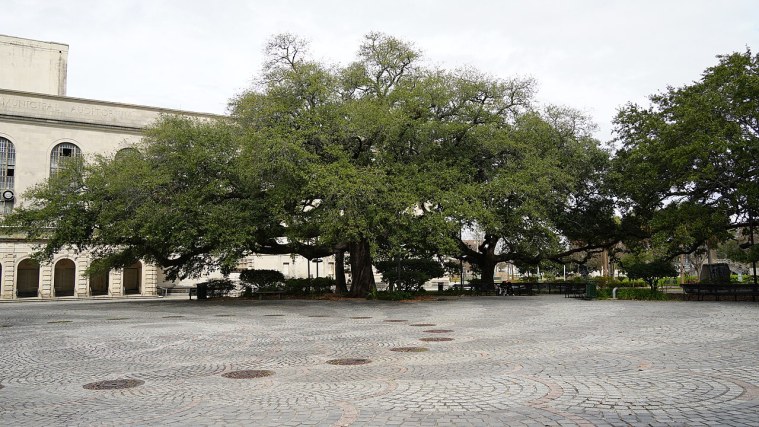
Photo: Miguel Discart (Photos Vrac), CC BY-SA 2.0 (cropped)
A stop on New Orleans French Quarter Walk, a free self-guided tour.
You have stepped out of the Quarter, across Rampart Street, into the open brick plaza of Congo Square, now inside Louis Armstrong Park. This may be the most important ground in the story of American music.
Under French and Spanish law, many enslaved people had Sundays free from work. In the 1700s and early 1800s they gathered on Sunday afternoons, and in 1817 the city limited those gatherings to this one spot. Here enslaved Africans, along with free people of color, played drums and gourds, sang, traded and danced dances with names like the bamboula and the calinda. The architect Benjamin Latrobe watched in 1819 and wrote of about 500 to 600 people dancing in rings.
Those rhythms did not disappear. Historians trace them into the brass band parades, second lines and jazz that grew up in the neighborhoods around you. Look for the historical markers around the plaza, and if you come on a Sunday, you may hear drum circles keeping the tradition alive.
Getting here: Walk up St. Peter Street away from the river for about four blocks to Rampart Street. Cross carefully and enter Louis Armstrong Park; Congo Square is the brick plaza just inside.
Did you know?: In 1893 the city renamed the spot Beauregard Square, but locals kept calling it Congo Square. The City Council made the old name official again in 2011.
Photo op: Stand beneath the big live oaks at the edge of the plaza and frame the circle of paving stones where the dancers once gathered.
More on Wikipedia: Congo Square · Louis Armstrong Park · Benjamin Henry Latrobe
Stops on this tour
- Jackson Square - The Old Parade Ground
- St. Louis Cathedral - Three Spires on the Square
- The Cabildo - Where Louisiana Changed Hands
- Pharmacy Museum - America's First Licensed Pharmacist
- Royal Street - Galleries, Ironwork and Street Music
- Preservation Hall - Jazz in a Plain Room
- Congo Square - Where the Drums Kept Sunday
- Lafitte's Blacksmith Shop - A Legend in Brick and Timber
- Old Ursuline Convent - The Quarter's Oldest Survivor
- Old U.S. Mint - Coins, Then Jazz
- French Market - Two Centuries of Trading
- Cafe du Monde - Beignets by the Square