Old Slave Mart - Where People Were Sold
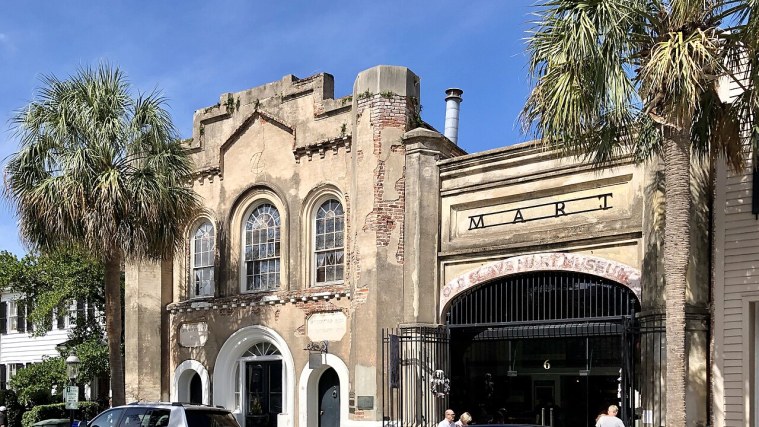
Photo: Warren LeMay from Covington, KY, United States, CC0 (cropped)
A stop on Charleston Historic District Walk, a free self-guided tour.
This modest building with the arched entrance and iron gate is one of the most important places on this walk. Here, men, women and children were sold at auction.
Charleston was the main gateway for the slave trade into North America. Historians estimate that around 40 percent or more of the enslaved Africans brought into what became the United States arrived through this port. Later, as the domestic trade grew, people born in South Carolina were sold away from their families to plantations in the Deep South. For decades, auctions were held in the open, including outside the Exchange you passed earlier.
In 1856 the city banned public auctions, largely to clear the sales off the streets, and the trade moved indoors. In 1859 auctioneer Z. B. Oakes built this auction gallery, with the auctioneer's table just inside the arch. Today the City of Charleston runs it as the Old Slave Mart Museum, telling the story of the trade and the people who endured it. Check the museum's website for current hours.
Getting here: Walk north on Meeting Street one block to Chalmers Street, turn right and follow the cobblestones east past Church Street; the mart is near the far end of the block, at No. 6.
Did you know?: After slavery ended, the building became a tenement in 1878, and by the 1920s it was a car dealership with a showroom.
Photo op: From the opposite side of Chalmers Street, photograph the arched entrance and iron gate. This is a place of remembrance, so keep your voice low.
More on Wikipedia: Old Slave Mart · Atlantic slave trade · Slavery in the United States
Stops on this tour
- Pineapple Fountain - Charleston's Front Porch
- Old Exchange - Customs, Constitution and Captives
- Rainbow Row - Merchant Houses in Pastel
- The Battery - Seawall, Cannons and Pirates
- St. Michael's Church - The Steeple Over Broad Street
- Four Corners of Law - Church, City, County, Nation
- Old Slave Mart - Where People Were Sold
- Dock Street Theatre - A Stage Since 1736
- St. Philip's Church - A Steeple That Guided Ships
- Kahal Kadosh Beth Elohim - A Temple from 1840
- Mother Emanuel AME Church - Faith and Resilience
- City Market - Four Blocks of Open Sheds