Cable Car Museum - The Working Powerhouse
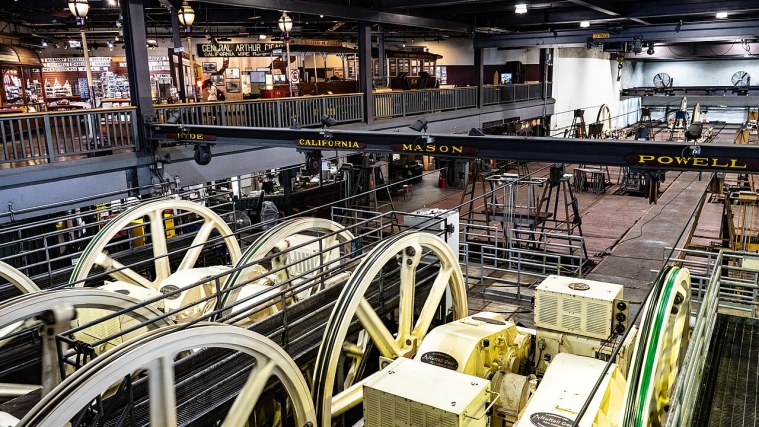
Photo: Han Zheng, CC BY-SA 2.0 (cropped)
A stop on San Francisco, District by District, a free self-guided tour.
Walk three blocks north on Mason Street to the brick barn at Washington Street, built in 1887 and rebuilt after 1906. It is more than a museum: it is the working powerhouse of the cable car system. From the gallery you can watch huge wheels drive the steel cables that run under the streets at a steady speed, and downstairs you can look into the vault where the cables enter.
Andrew Hallidie's Clay Street line made its first run on August 2, 1873. By the 1890s cable lines crisscrossed the city, but after 1906 most were replaced by electric streetcars. In 1947 the mayor proposed scrapping the last ones, and Friedel Klussmann led a citizens' campaign that saved them at the ballot box.
Admission is free; check current hours. Among the displays is a car from Hallidie's original Clay Street line.
More on Wikipedia: San Francisco Cable Car Museum · Andrew Smith Hallidie · Friedel Klussmann
Stops on this tour
- Ferry Building and the Embarcadero - Where the City Met the World
- Financial District and Jackson Square - Gold Rush on the Old Shoreline
- Chinatown - The Neighborhood That Refused to Move
- North Beach and Telegraph Hill - Little Italy and the Beats
- Fisherman's Wharf - Italian Boats and Old Ships
- Nob Hill and Russian Hill - Cable Cars, Mansions and the Great Fire
- The Presidio - Two Centuries Guarding the Golden Gate
- Japantown and the Fillmore - Two Communities, One Neighborhood
- Haight-Ashbury - From Victorian Suburb to Summer of Love
- Golden Gate Park - Sand Dunes Turned Into a Park
- The Castro - A Neighborhood That Became a Movement
- The Mission - Where San Francisco Began
- Civic Center - Domes, Charters and Protest
- South of Market - From Rincon Hill to the Tech Boom