Selma Interpretive Center - At the Foot of the Bridge
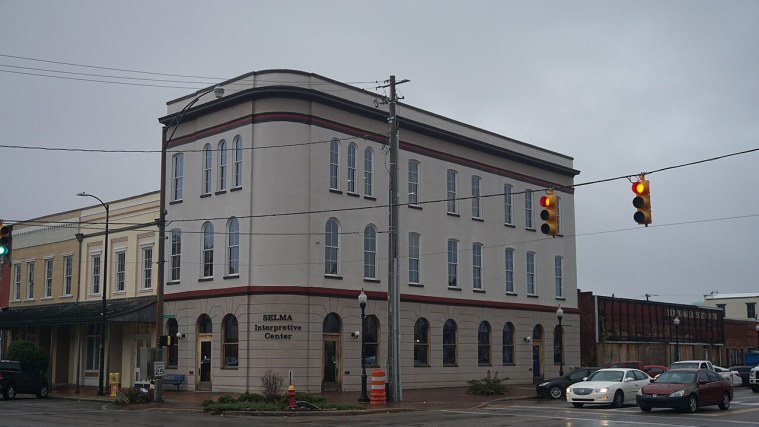
Photo: Michael Barera, CC BY-SA 4.0 (cropped)
A stop on Selma: Bloody Sunday and the Vote, a free self-guided tour.
On Sunday afternoon, March 7, 1965, the marchers walked two by two from Brown Chapel through downtown and turned toward the river here, at the foot of the bridge. There were about 600 of them, carrying no weapons. They were mourning Jimmie Lee Jackson, a young church deacon shot by a state trooper during a night march in nearby Marion, and they meant to walk 54 miles to the state capitol in Montgomery to demand the vote.
At their head walked John Lewis, the 25-year-old chairman of SNCC, and Hosea Williams of the SCLC. Ahead of them rose the steel arch of the Edmund Pettus Bridge.
The three-story building on this corner, built in the 1880s, is the National Park Service's Selma Interpretive Center, where photographs, artifacts and oral histories tell the story of the march. It is closed for major construction, which the Park Service expects to last until about 2028, and a temporary visitor desk operates at the Selma Welcome Center. Check the park's website before you go.
Getting here: Walk back east along Alabama Avenue to Broad Street, then turn right toward the river to the corner of Water Avenue at the foot of the bridge.
Did you know?: Congress created the Selma to Montgomery National Historic Trail in 1996. Besides this center, the Park Service runs interpretive centers in Lowndes County and in Montgomery along the route.
Photo op: From the corner of Broad Street and Water Avenue, frame the bridge's steel arch rising beyond the historic storefronts.
More on Wikipedia: Selma to Montgomery National Historic Trail · Murder of Jimmie Lee Jackson · John Lewis · Hosea Williams
Stops on this tour
- Brown Chapel AME Church - Where the Marches Began
- First Baptist Church - The Movement's Open Door
- Carver Homes - Where the Marchers Gathered
- Martin Luther King Jr. Street - A Street of Memory
- Dallas County Courthouse - The Long Lines to Vote
- Selma Interpretive Center - At the Foot of the Bridge
- Edmund Pettus Bridge - Bloody Sunday
- National Voting Rights Museum - The Road to the Vote