San Gervasio - Pilgrims of the Moon Goddess
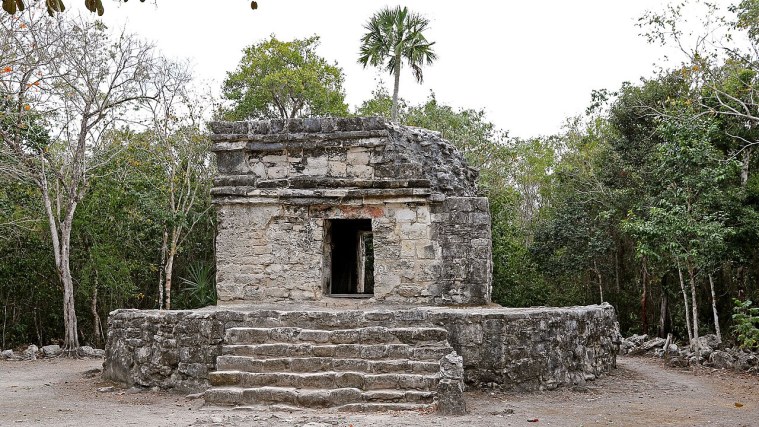
Photo: Banja-Frans Mulder, CC BY 3.0 (cropped)
A stop on Cozumel: San Miguel and the Island, a free self-guided tour.
In the forest at the island's center, these low stone buildings were once Cozumel's largest Maya settlement. The Maya called it Tantun Cuzamil. It began as a small community around 300 CE, grew quickly after about 600, and by about 1200 was the island's main town and religious center.
Cozumel was then one of the great pilgrimage destinations of the Maya world. It was sacred to Ixchel, goddess of the moon, childbirth, medicine and weaving, and tradition holds that Maya women crossed the channel by canoe to make offerings at least once in their lives. A Spanish bishop of the 1500s, Diego de Landa, compared the island's pull to that of Jerusalem and Rome. Archaeologists caution that no single building here has been proven to be Ixchel's temple.
Walk the sacbes, the raised white roads that link the building groups. Look for the small arch called El Arco and the faded red handprints at Las Manitas. Bring water and insect repellent, and check current hours.
Getting here: Drive or ride east out of town on Avenida Benito Juarez, which becomes the cross-island road. Watch for the signed turnoff to San Gervasio on the left and follow that road to the site entrance.
Did you know?: The site's Maya name, Tantun Cuzamil, is usually translated as flat rock in the place of the swallows, and the name Cozumel itself comes from the Maya words for island of swallows.
Photo op: Stand on the sacbe in front of El Arco and frame the small stone arch with the white road leading through it.
More on Wikipedia: San Gervasio · Ixchel · Diego de Landa · Sacbe
Stops on this tour
- Plaza del Sol - Where the Island Says Hello
- Iglesia de San Miguel - The Archangel Who Hid
- Museo de la Isla - The Island in One Building
- San Gervasio - Pilgrims of the Moon Goddess
- Punta Morena - Where the Island Turns Wild
- Chen Rio - A Pool the Rocks Built
- El Mirador - An Arch in the Surf
- Punta Sur - Lighthouse at the End of the Island
- El Cedral - The Village of the Vow
- Chankanaab - The Little Sea and the Reef
- San Miguel Waterfront - Sunset Over the Channel