Long Wharf - Portal to Slavery, Gateway to Freedom
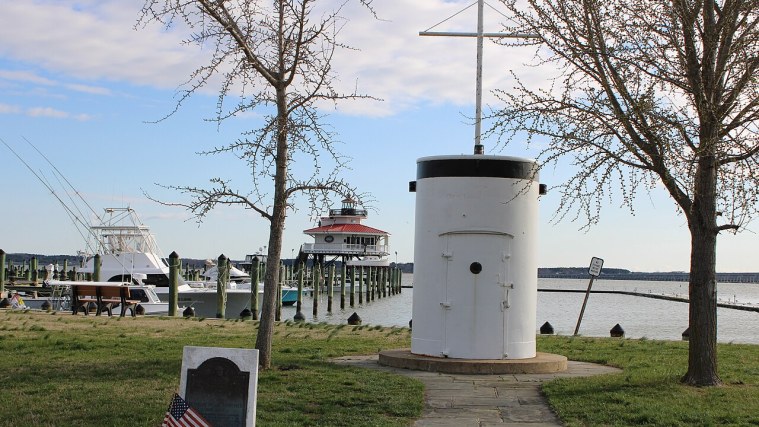
Photo: Nolabob, CC BY-SA 4.0 (cropped)
A stop on Harriet Tubman, a free self-guided tour.
Walk to the water's edge where the Choptank River opens wide. Today Long Wharf is a park with a lighthouse replica and a view of passing sailboats. For generations, though, this waterfront meant terror for Black families on the Eastern Shore.
In the 1700s ships brought captive Africans to Cambridge to be sold. After the United States banned the overseas trade in 1808, the flow turned around. Cotton was spreading across the Deep South while Eastern Shore wheat was losing value, and thousands of enslaved people from this region were sold away, many shipped from this wharf. Most never saw home or family again. Tubman knew that fear well: her own sisters were among those sold.
The same water carried hope. Black watermen, free and enslaved, worked these docks and passed news up and down the Bay, and it was by boat that Kessiah Bowley and her children escaped to Baltimore in 1850.
Stand facing the river for a moment and hold both kinds of departure in mind.
Getting here: Walk or drive to the bottom of High Street, where it meets Water Street at the river; there is a parking lot at the wharf.
Did you know?: The screwpile lighthouse on the pier is a replica of the old Choptank River Light, built in 2012 from plans in the National Archives and paid for largely by local residents.
Photo op: From the end of the pier, look back at the wharf and High Street rising behind it.
Nearby: Restaurants are nearby on High Street and along the creek; the lighthouse and marina area has seasonal facilities. A farmers market runs here on Thursday afternoons from May through November.
More on Wikipedia: Cambridge, Maryland · Choptank River · Chesapeake Bay
Stops on this tour
- Harriet Tubman Museum - Take My Hand
- Dorchester County Courthouse - The Auction That Failed
- Long Wharf - Portal to Slavery, Gateway to Freedom
- Bethel AME Church - Pine Street's Anchor
- Malone's Church - Where Minty Was Born
- Stewart's Canal - Waterways and Watermen
- Tubman Visitor Center - Her Whole Life in View
- Blackwater Refuge - The Land She Learned to Read
- Brodess Farm - A Childhood Hired Out
- Bucktown Village Store - The Blow That Changed Her
- Scott's Chapel - Faith on Both Sides of the Road
- Leverton House - Quaker Shelter at Preston
- Choptank Landing - The River North
- Poplar Neck - Bringing Her Parents Out