Rainbow Row - Merchant Houses in Pastel
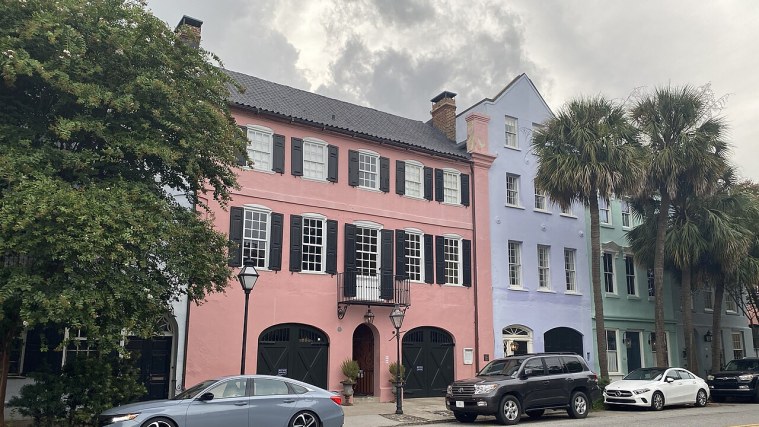
Photo: Thomson200, CC0 (cropped)
A stop on Charleston Historic District Walk, a free self-guided tour.
Across the street stands Charleston's most photographed block: thirteen attached houses, numbers 79 to 107 East Bay Street, painted pink, blue, green and yellow. Most date from the 1700s, when this street ran along the waterfront. They were working buildings, with merchants' shops and counting rooms on the ground floor and living quarters above. In this port city, households like these commonly depended on enslaved workers, who cooked, hauled and cleaned and lived in the buildings out back.
By the early 1900s many of the houses had fallen into disrepair. Preservationist Susan Pringle Frost bought several in the 1920s, and in 1931 Dorothy Porcher Legge and her husband began restoring 99 to 101, painting it pink after colonial Caribbean color schemes. Neighbors followed with their own colors, and the rainbow was born.
You may hear that the colors helped tipsy sailors find their lodgings, or helped people who could not read find the right shop. Those are popular legends with no evidence behind them.
Getting here: Continue south on East Bay Street past Elliott Street. Rainbow Row lines the left side of the street down to Tradd Street; the best view is from the opposite sidewalk.
Did you know?: No. 103 is the Joseph Dulles House, built around 1787 by an ancestor of John Foster Dulles, who became U.S. Secretary of State in the 1950s.
Photo op: From the west sidewalk near Tradd Street, aim north up the row so the colors step away from you in a line.
More on Wikipedia: Rainbow Row · Susan Pringle Frost · Preservation Society of Charleston
Stops on this tour
- Pineapple Fountain - Charleston's Front Porch
- Old Exchange - Customs, Constitution and Captives
- Rainbow Row - Merchant Houses in Pastel
- The Battery - Seawall, Cannons and Pirates
- St. Michael's Church - The Steeple Over Broad Street
- Four Corners of Law - Church, City, County, Nation
- Old Slave Mart - Where People Were Sold
- Dock Street Theatre - A Stage Since 1736
- St. Philip's Church - A Steeple That Guided Ships
- Kahal Kadosh Beth Elohim - A Temple from 1840
- Mother Emanuel AME Church - Faith and Resilience
- City Market - Four Blocks of Open Sheds