Plaza de los Coches - A Market of Human Lives
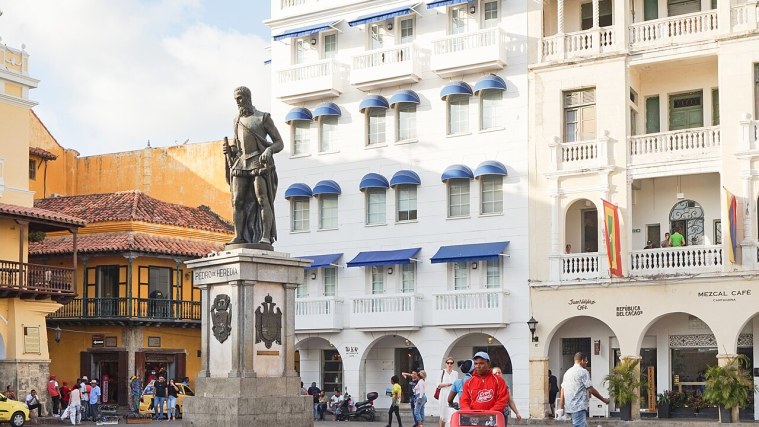
Photo: Bernard Gagnon, CC BY-SA 4.0 (cropped)
A stop on Cartagena Walled City Walk, a free self-guided tour.
You are now just inside the Clock Gate, in a triangular plaza lined with arcades. It looks cheerful today, but it carries the hardest history in the city. In colonial times this was a market where enslaved Africans were sold.
Cartagena was one of the main ports through which Spain brought enslaved people into its South American colonies. By the early 1600s about 10,000 arrived here each year, and roughly a third of those who were put on the ships are thought to have died on the crossing. Families were split, names were taken, and people were sold to work in mines, plantations and homes.
The plaza got its current name, the Square of the Carriages, only in the late 1800s, when carriages were allowed to park here. The statue in the middle is Pedro de Heredia, who founded the city in 1533 and was harsh toward the Indigenous people of the region.
Under the arcade called the Portal de los Dulces, vendors sell traditional sweets. It is worth a stop, and worth remembering where you are standing.
Getting here: Walk back from Getsemani the way you came and pass through the arches of the Clock Gate; the plaza opens right in front of you.
Did you know?: Before it was named for carriages, this plaza went by several other names, including one that recalled the slave market.
Photo op: From the inner side of the Clock Gate, frame the Heredia statue with the arcades of the Portal de los Dulces behind it.
More on Wikipedia: Atlantic slave trade · Pedro de Heredia · Cartagena, Colombia
Stops on this tour
- Torre del Reloj - The Clock Tower Gate
- Getsemani and Plaza de la Trinidad - Where Independence Began
- Plaza de los Coches - A Market of Human Lives
- Plaza de la Aduana - Customs, Columbus and City Hall
- Church of San Pedro Claver - Servant of the Enslaved
- Las Murallas - Walking the City Walls
- Plaza Santo Domingo - Legends and a Botero
- Palace of the Inquisition - Fear Behind a Fine Doorway
- Cathedral and Plaza de Bolivar - Shade, Stone and Gold
- Plaza de San Diego - Convents and a Novelist's Ghost Story
- Las Bovedas - Vaults in the Wall
- Church of Santo Toribio - The Cannonball at Mass