Chief Seattle Statue - The Man Behind the Name
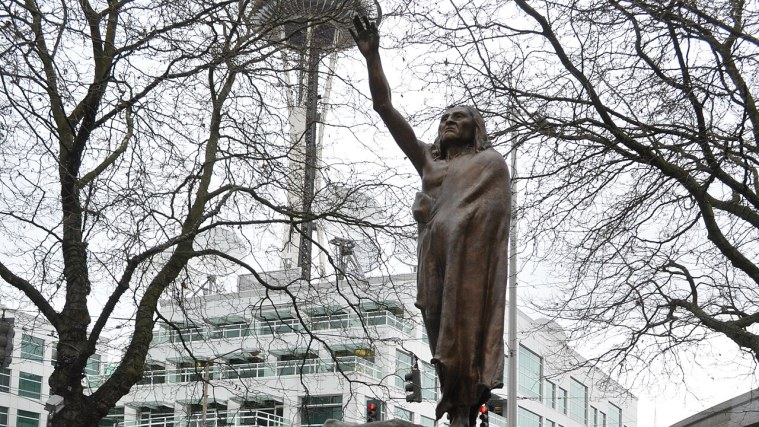
Photo: Joe Mabel, CC BY-SA 3.0 (cropped)
A stop on Seattle Pike Place and Downtown, a free self-guided tour.
In this small triangular plaza, called Tilikum Place, a bronze figure raises one hand in greeting toward the bay. This is Si'ahl, the Duwamish and Suquamish leader whose name, anglicized, became Seattle. Local sculptor James Wehn made the statue, and it was unveiled on November 13, 1912, by Myrtle Loughery, the chief's great-great-granddaughter.
Si'ahl was born around 1780 and was already an elder when American settlers arrived in 1851. He was known for keeping the peace with the newcomers, and in 1855 he signed the Treaty of Point Elliott, which gave up millions of acres of Native land in the region. He died in 1866 and is buried in Suquamish, across Puget Sound.
A famous speech is credited to him, but its words come from notes published decades later and heavily embellished, so no one knows exactly what he said. The Duwamish people are still here, and their longhouse stands along the Duwamish River in West Seattle. Tilikum means friends or people in Chinook Jargon, the old regional trade language.
Getting here: From the top of the sculpture park, walk uphill and northeast on Broad Street or Denny Way. Tilikum Place is the little triangle where Fifth Avenue, Denny Way and Cedar Street meet.
Did you know?: A restoration revealed the statue was originally covered in gold leaf. Years earlier, in 1980, a taxi driver tried to scrub off its green patina himself and left it scratched down to bare bronze.
Photo op: Stand a few steps southeast of the statue and frame the raised hand with the Space Needle rising behind it.
More on Wikipedia: Statue of Chief Seattle · Chief Seattle · Treaty of Point Elliott · Duwamish people
Stops on this tour
- Pioneer Square - Where Seattle Began
- Smith Tower - Seattle's First Skyscraper
- Seattle Central Library - A Library Made of Glass
- Seattle Art Museum - Meet Hammering Man
- Gum Wall - The Stickiest Spot in Town
- Pike Place Market - Meet the Producer
- Original Starbucks - A Famous Coffee Line
- Victor Steinbrueck Park - The Man Who Saved the Market
- Seattle Waterfront - A Shoreline Reborn
- The Edgewater - Where the Beatles Went Fishing
- Olympic Sculpture Park - Art by the Bay
- Chief Seattle Statue - The Man Behind the Name
- Space Needle - The 1962 World's Fair Icon