Itimad-ud-Daulah - The Jewel Box Known as the Baby Taj
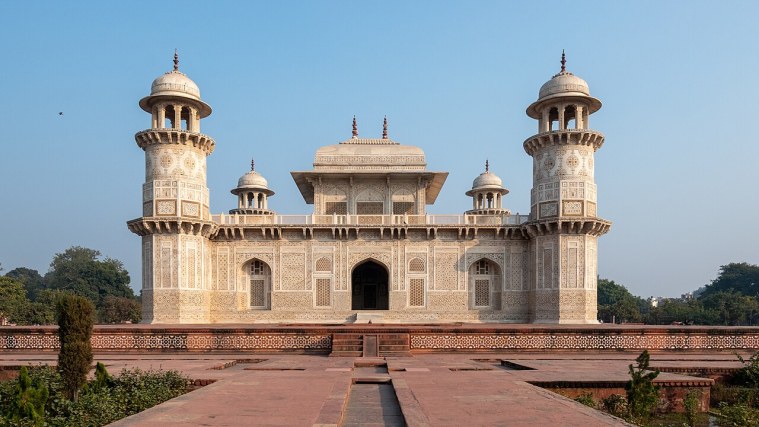
Photo: Rohit Sharma, CC BY-SA 4.0 (cropped)
A stop on Taj Mahal and Agra: A Self-Guided Visit, a free self-guided tour.
Cross to the east bank of the Yamuna and you find this small, dazzling tomb, often called the Baby Taj. It was built between 1622 and 1628 by Empress Nur Jahan, wife of Emperor Jahangir, for her father, Mirza Ghiyas Beg. He was a Persian who rose to become one of the empire's top officials, with the title Itimad-ud-Daulah, Pillar of the State. He was also Mumtaz Mahal's grandfather, so you are still following the same family.
Walk close to the walls. Every surface is covered with inlay of colored stone: wine cups, cypress trees, flower vases and geometric patterns. This is thought to be the first Mughal tomb built entirely of white marble, and its inlay points the way to the Taj Mahal.
It has no great dome and stands only a couple of stories high, but that is the charm. It is quieter than the Taj, so slow down, look at the details and peer through the carved marble screens.
Getting here: From Agra Fort, take an auto-rickshaw or car across the Yamuna bridge to the east bank, about 3 kilometers; the tomb sits in a walled garden by the river.
Did you know?: Mirza Ghiyas Beg's daughter Nur Jahan became one of the most powerful women in Mughal history, and coins were even struck in her name.
Photo op: From the garden walkway in front of the entrance, frame the whole tomb with its four corner towers and the water channel leading up to it.
Nearby: Restrooms are near the entrance. This site is usually much less crowded than the Taj, making it a good place for a rest in the shade of the garden.
More on Wikipedia: Itmad Ud Daulah · Nur Jahan · Jahangir
Stops on this tour
- Taj Mahal East Gate - Where the Procession Began
- The Great Gate - A Frame for Paradise
- The Charbagh Garden - Paradise in Four Parts
- The Mausoleum - A Promise in White Marble
- Inside the Tomb - Flowers Made of Stone
- The Taj Mahal Mosque - Facing West to Pray
- The Riverside Terrace - Shah Jahan's River View
- The Jawab - A Building Made Only for Symmetry
- Agra Fort - The Hall Where the Emperor Listened
- Musamman Burj - Shah Jahan's Last View of the Taj
- Itimad-ud-Daulah - The Jewel Box Known as the Baby Taj
- Mehtab Bagh - The Moonlight Garden at Sunset