Aircraft Engine Collection
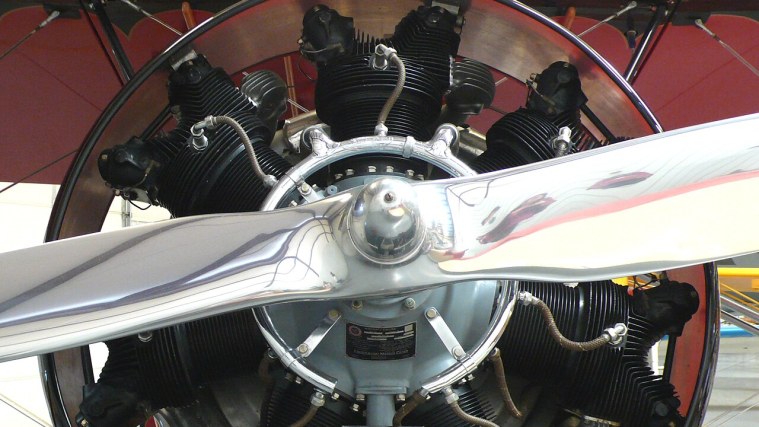
Photo: TimVickers, public domain (cropped)
A stop on Hiller Aviation Museum: Unofficial Guide, a free self-guided tour.
Engines have driven much of aviation's progress. Early engines were heavy and produced little power; the Wrights had to build their own because none suitable could be bought.
Radial engines, with cylinders arranged in a circle around the crankshaft, powered many airplanes from the 1920s through the 1950s. They were air-cooled, reliable and recognizable by their round fronts and distinctive sound.
Jet engines, developed in Britain and Germany in the 1930s and 1940s, replaced pistons for fast aircraft. Air is compressed, mixed with fuel and burned, and the hot gases spin a turbine and rush out the back. Today's airliners use turbofans, in which a large fan moves much of the air around the core, making them quieter and more efficient.
Look for engines cut away to show their insides.
More on Wikipedia: Radial engine
Stops on this tour
- Boeing 747-100 Cockpit and Forward Fuselage
- Hiller Flying Platform
- Boeing Condor High-Altitude Reconnaissance UAV
- NASA AD-1 Oblique Wing Research Aircraft
- Wright Flyer Replica and Early Flight Exhibit
- Black Diamond - 1910 California Pioneer Aircraft
- Grumman HU-16 Albatross Amphibious Aircraft
- Boeing 737-200 Cockpit
- Flight Sim Zone
- Women in Aviation Gallery
- Aircraft Engine Collection
- Lockheed YO-3 Quiet Star
- San Francisco Airport Control Tower Beacon
- Drone Plex and Future of Flight Exhibit
- Michael King Smith Research Library and Museum Store