Old Faithful - Nature's Most Famous Clock
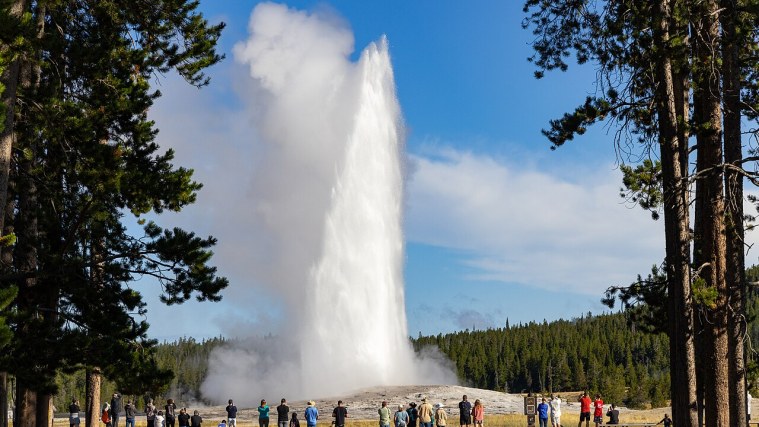
Photo: YellowstoneNPS, public domain (cropped)
A stop on Yellowstone Geyser Country, a free self-guided tour.
You're facing the most famous geyser in the world. The low mound in front of you may only be steaming now, but underground a column of water is heating well past its boiling point.
Here's how it works. Rain and snowmelt seep down through cracks until they meet heat rising from the hot rock beneath Yellowstone. Silica dissolved from that volcanic rock coats the cracks and narrows them, so the plumbing works like a pressure cooker. When water near the top finally boils, the pressure drops, the superheated water below flashes to steam, and the whole column blasts out.
Members of the 1870 Washburn expedition named Old Faithful for its steady rhythm, the first geyser in the park to get a name. Eruptions usually reach about 106 to 185 feet and most often come 60 to 100 minutes apart. Rangers forecast the next one from how long the last one lasted, so check the posted time and treat it as a prediction, not a promise.
Getting here: Park in the Old Faithful lots and walk to the Visitor Education Center; the geyser's viewing benches are a short stroll beyond it.
Did you know?: In 1882, soldiers tried doing laundry in Old Faithful: cotton and linen came out clean, but wool was torn to shreds.
Photo op: Step back from the front row so the whole column and the crowd fit in the frame for scale, and shoot a burst as the water climbs.
Nearby: The Visitor Education Center has restrooms, drinking water and exhibits; general stores, the Old Faithful Lodge cafeteria and the Inn's dining room are nearby. Check nps.gov for current hours.
More on Wikipedia: Old Faithful · Washburn-Langford-Doane Expedition · Yellowstone hotspot · Geothermal areas of Yellowstone
Stops on this tour
- Old Faithful - Nature's Most Famous Clock
- Old Faithful Inn - A Log Lodge Built in One Winter
- Castle Geyser - A Cone Built Over Centuries
- Grand Geyser - The Tallest You Can Plan For
- Morning Glory Pool - A Lesson in Leaving No Trace
- Black Sand Basin - Obsidian Sand and Emerald Water
- Biscuit Basin - Where the Ground Exploded
- Grand Prismatic Overlook - The Rainbow From Above
- Midway Geyser Basin - Up Close With Grand Prismatic
- Firehole Lake Drive - Great Fountain's Back Road
- Fountain Paint Pot - All Four Kinds in One Walk
- Firehole Canyon Drive - Lava Walls and a Waterfall