Philipsburg - The Dutch Capital
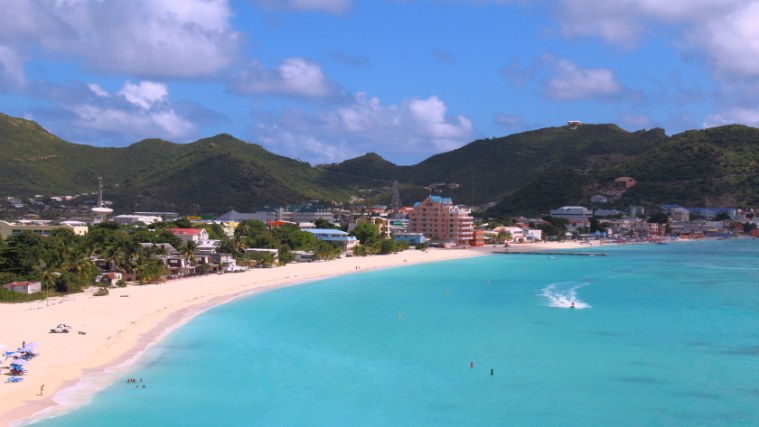
Photo: Clavius66, CC BY-SA 3.0 (cropped)
A stop on St Maarten Island Paradise Tour, a free self-guided tour.
Philipsburg, the capital of Sint Maarten, sits on a narrow strip of sand between Great Bay and the Great Salt Pond. It was founded in 1763 and named for John Philips, a Scottish officer in Dutch service who served as the island's commander.
Salt was the reason the Dutch came. The Great Salt Pond behind the town was divided into pans where seawater evaporated in the sun, and workers, most of them enslaved until 1863, raked and carried the salt to ships bound for the Netherlands and its colonies, where it was used to preserve fish and meat. Salt production on the pond continued until 1949.
Front Street, running parallel to the beach, is lined with duty-free shops selling jewelry, electronics and liquor. Back Street, one block inland, has more local shops. Narrow lanes called steegjes connect the two.
The white wooden Courthouse on Front Street, built in 1793 and topped with a pineapple-shaped cupola, is the best-known historic building in town. It has served as a council hall, a jail, a post office and a fire station as well as a court.
Look also for shops selling guavaberry liqueur, the island's traditional drink, made from rum and the small berries of a wild tree that grows in the hills. It is a Christmas tradition on the island.
The small Sint Maarten Museum covers the island's history, from the Arawak people through the colonial era and salt trade to modern times.
Cruise ships dock at the pier just east of town, so Philipsburg is busiest on ship days.
More on Wikipedia: Philipsburg, Sint Maarten
Stops on this tour
- Philipsburg - The Dutch Capital
- Fort Amsterdam - Historic Dutch Fortress
- Great Bay Beach - Urban Coastal Paradise
- Simpson Bay - Marina and Lagoon
- Maho Beach - World-Famous Plane Watching
- Mullet Bay Beach - Serene Coastal Escape
- Cupecoy Beach - Dramatic Cliffs and Caves
- Marigot - French Capital and Market
- Grand Case - The Gourmet Capital
- Orient Bay Beach - The St Tropez of the Caribbean
- Pinel Island - Secluded Island Paradise
- Loterie Farm - Mountain Adventure Park
- Pic Paradis - Island Summit Views
- Toppers Rhum Distillery - Award-Winning Spirits
- Rainforest Adventures - Extreme Zipline Experience