Brown Chapel AME Church - Where the Marches Began
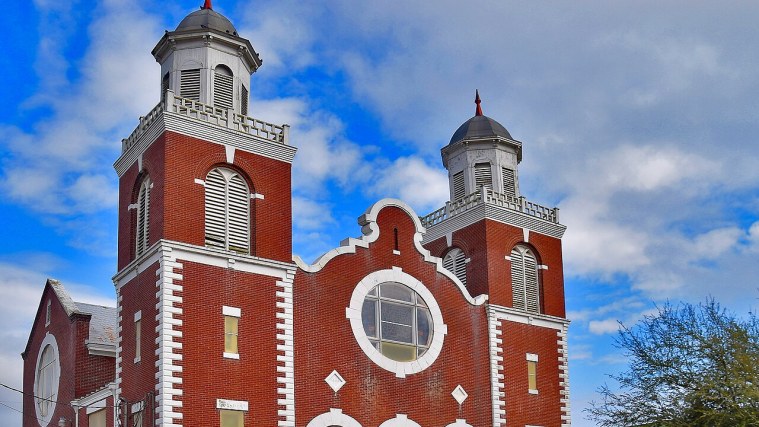
Photo: Ron Cogswell from Arlington, Virginia, USA, CC BY 2.0 (cropped)
A stop on Selma: Bloody Sunday and the Vote, a free self-guided tour.
Stand before this twin-towered church and you are at the starting line of the voting rights movement in Selma. Brown Chapel's congregation dates to just after the Civil War, and the present building, with its round arches and Byzantine touches, was completed in 1908 by African American builder A. J. Farley.
In early 1965 the church became the Selma headquarters of the Southern Christian Leadership Conference. On January 2, 1965, Martin Luther King Jr. spoke here to launch a new push for the vote, joining local leaders who had been fighting for years. Night after night the pews filled for mass meetings, with singing, prayer and plans for the next day, even when court orders tried to ban such gatherings.
On March 7, 1965, marchers set out from here toward the Edmund Pettus Bridge, and here they returned that afternoon, seeking refuge. Two weeks later, the march to Montgomery began at these same doors.
Out front stands a granite monument with a bust of Dr. King, dedicated in 1979.
Getting here: The tour begins at Brown Chapel AME Church, 410 Martin Luther King Jr. Street, in the George Washington Carver Homes neighborhood.
Did you know?: The sanctuary closed in 2020 after serious termite and water damage was found, and in 2022 the church was named one of America's 11 Most Endangered Historic Places. Restoration has been underway since, so check ahead if you hope to see inside.
Photo op: From across Martin Luther King Jr. Street, frame the King monument in the foreground with the church's twin towers rising behind it.
More on Wikipedia: Brown Chapel A.M.E. Church · Martin Luther King Jr. · Southern Christian Leadership Conference
Stops on this tour
- Brown Chapel AME Church - Where the Marches Began
- First Baptist Church - The Movement's Open Door
- Carver Homes - Where the Marchers Gathered
- Martin Luther King Jr. Street - A Street of Memory
- Dallas County Courthouse - The Long Lines to Vote
- Selma Interpretive Center - At the Foot of the Bridge
- Edmund Pettus Bridge - Bloody Sunday
- National Voting Rights Museum - The Road to the Vote